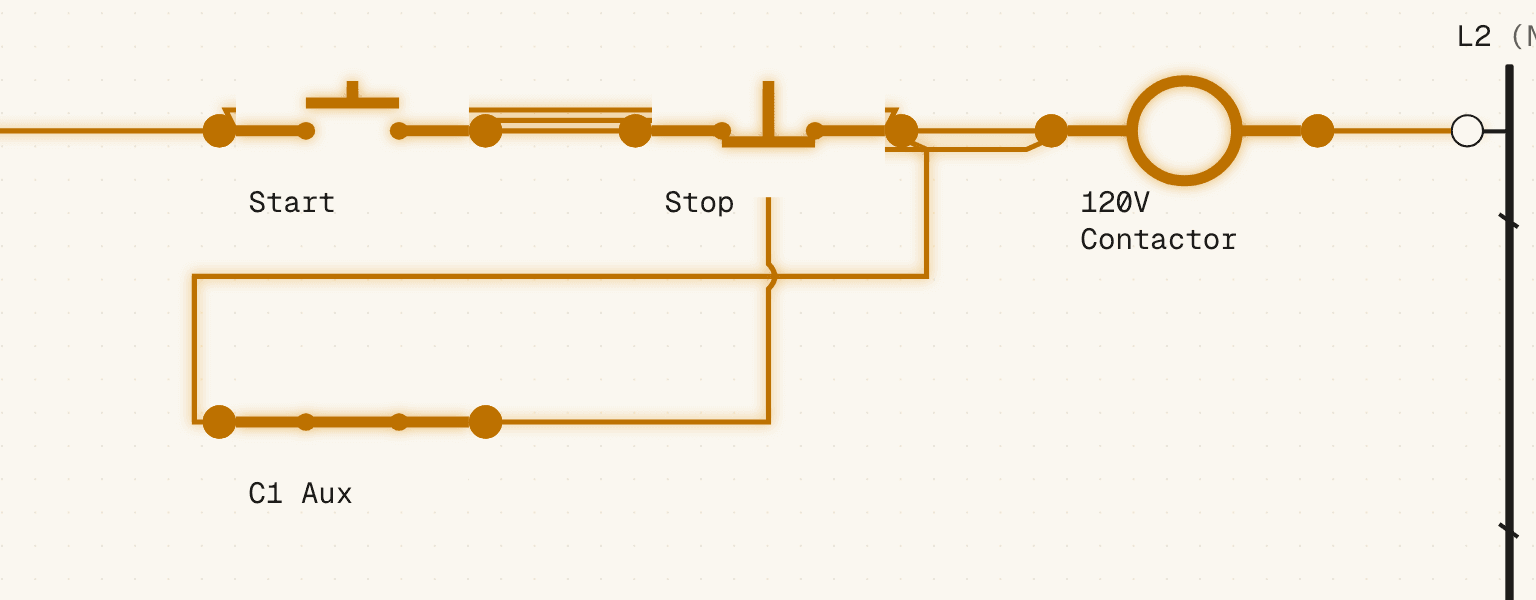
The circuit actually runs
Press run and the diagram comes alive: energized paths light up, coils pull in, seal-ins hold, timers count. Toggle a switch and watch the effect — not trace it on a static print.
Motor control · circuit simulator
Coilyard is an interactive circuit builder for teaching hardwired motor control. Draw ladder diagrams with contactors, overload relays, timers, and pilot lights, then run them live. Demonstrate three-wire control, seal-in — no kit required to show a concept.
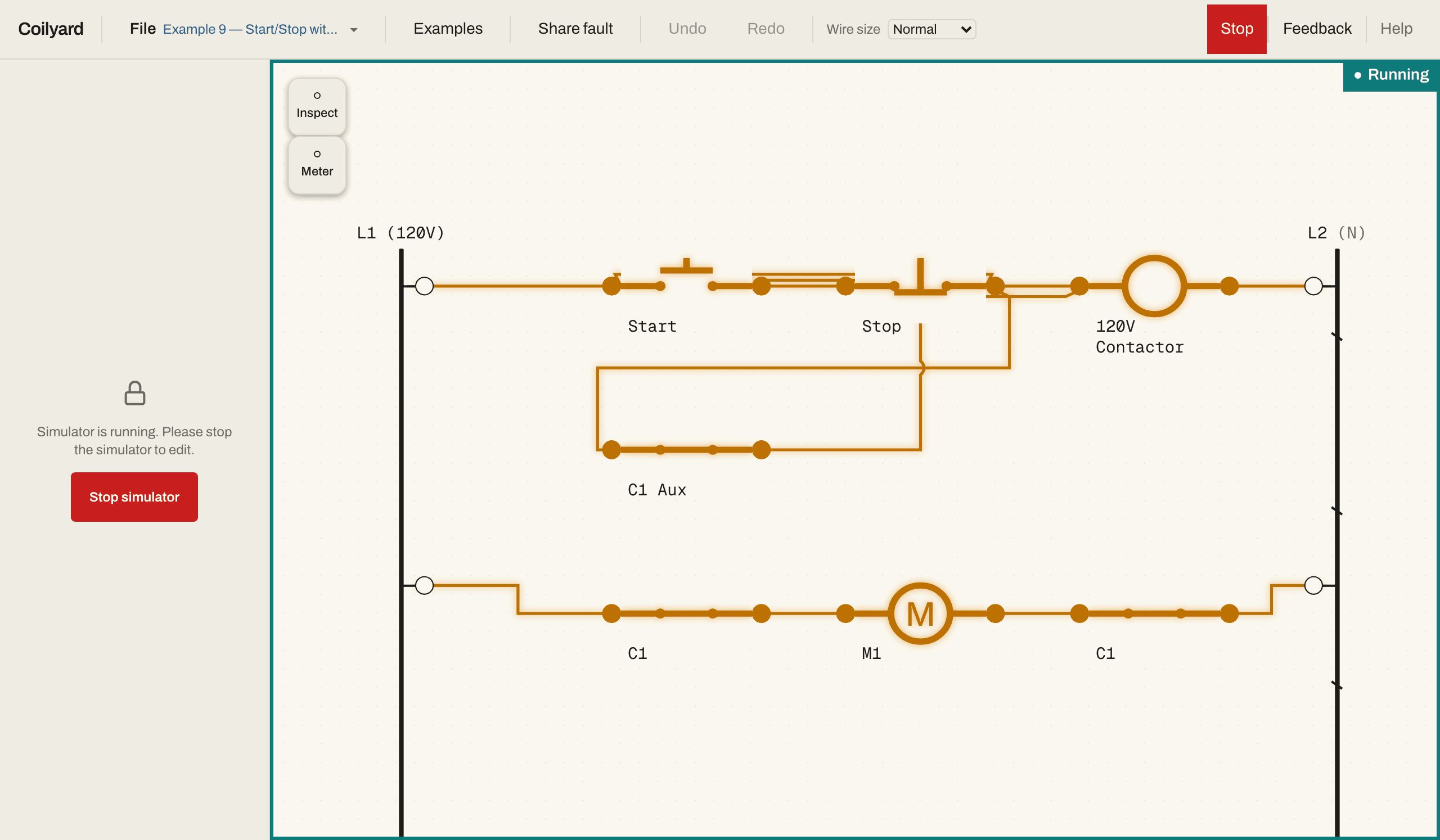
Press run and the diagram comes alive: energized paths light up, coils pull in, seal-ins hold, timers count. Toggle a switch and watch the effect — not trace it on a static print.
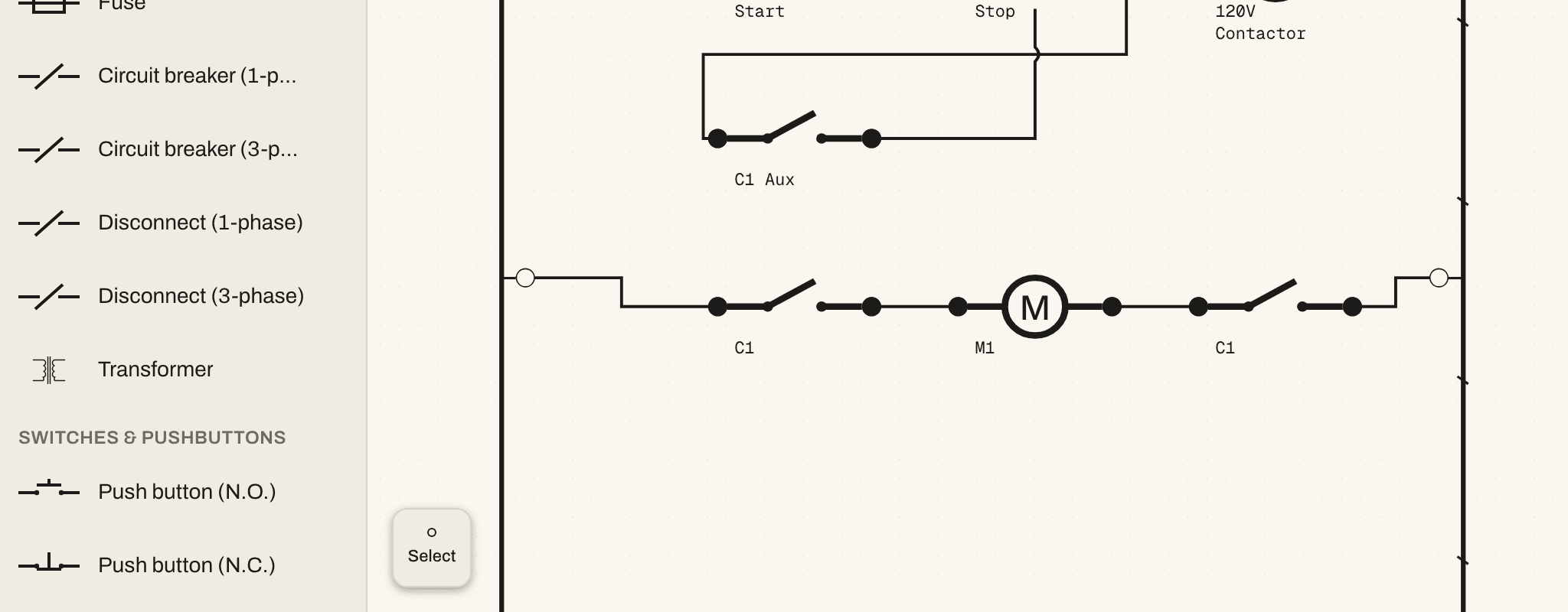
Touch and pen are first-class inputs. Demo live on the interactive whiteboard already in your classroom, then hand control to a student at the board.
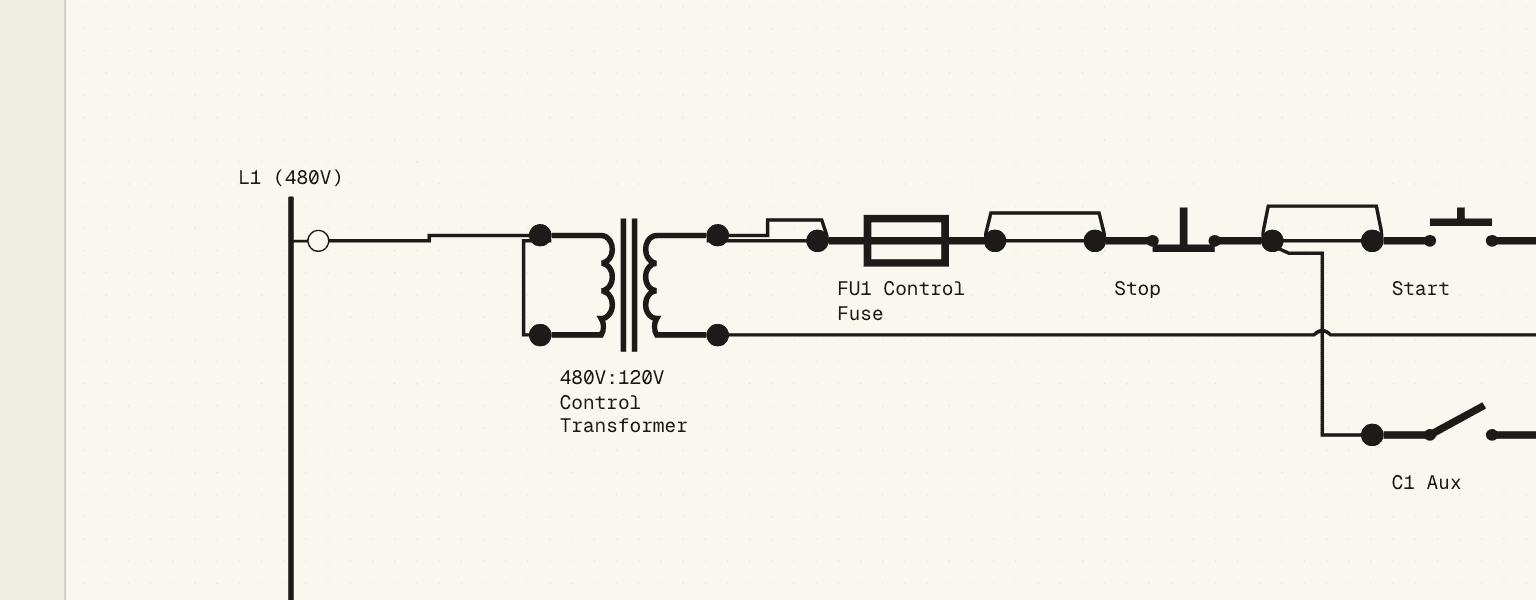
Contactors, control relays, overload relays, pushbuttons, timers, pilot lights, control transformers, fuses. Rails and rungs follow real wiring conventions — the diagram on screen matches the print in the shop.
Fault-finding practice
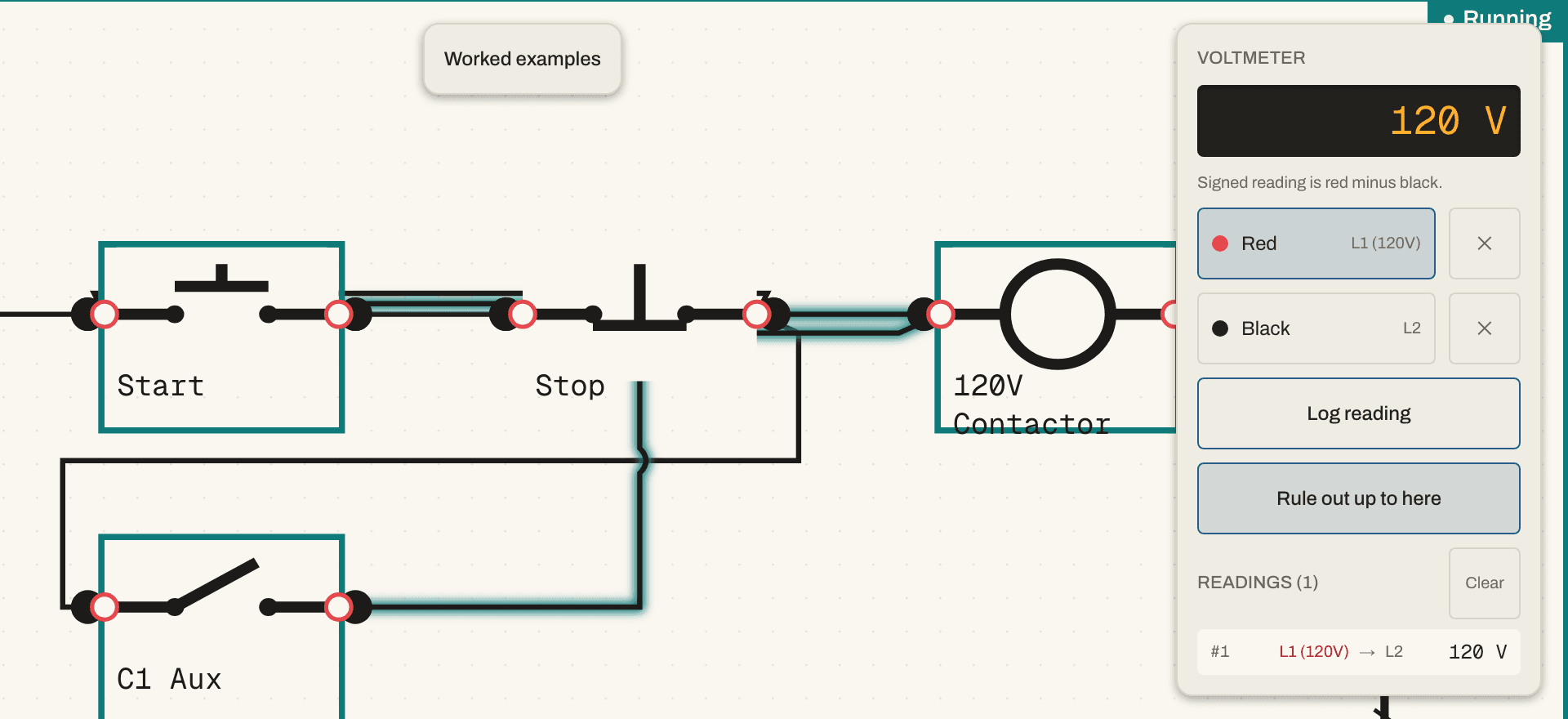
Share a fault link and the circuit loads misbehaving — won't start, won't seal, won't stop — with the cause hidden. Students measure with the on-screen voltmeter, log readings, rule parts out, and commit one graded diagnosis: the part and the mechanism. The reveal scores the call against their own measurements, never an answer key.
Draw rails and rungs, place contactors, relays, and pushbuttons, and wire them the way the print does.
Press run. Energized paths render, coils pull in, timers count. Stop resets clean, so the demonstration repeats.
Demo at the whiteboard, hand control to a student, or share a fault link and grade the diagnosis.
PRICING
One subject, one campus, one year: $2,000/year or $200/month. Unlimited instructors, classes, and students. The terms we intend: invoiced against a purchase order, ACH preferred, net-30/60 — none of which can be set up yet, because there is no way to bill anyone today.
For instructors buying for themselves: $19/month or $190/year. One seat, three active classes, custom authoring. Paid by card.